

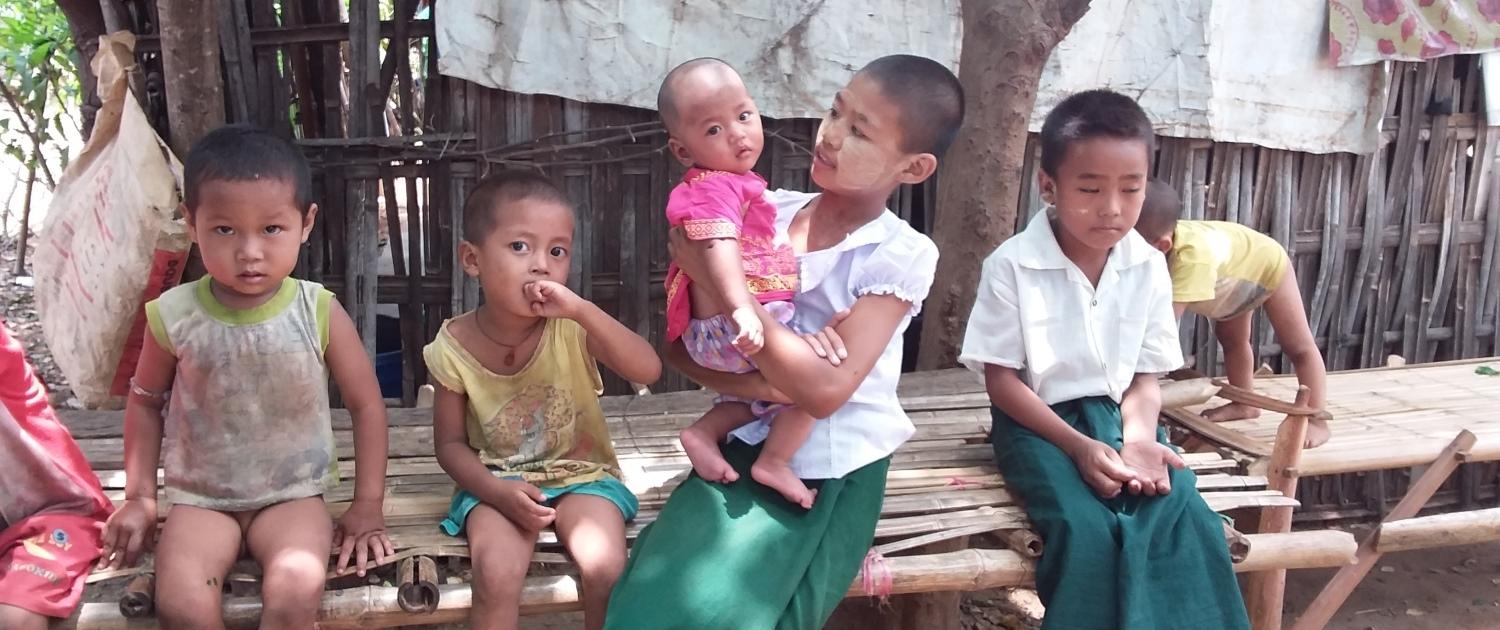
Many regions in rural Myanmar suffer from water shortages, especially in the Dry Zone around Bagan. Walking daily to water wells can take many hours, making it an everyday struggle to fetch a few liters of water for the village.
Moreover, as groundwater can only be found around 500-800 feet below the ground of the village, we had partnered up with the village committee, building a water supply system from the closest water resource outside of the village to the center of the community. Most of the villagers are farmers and pottery makers, which has been a long-lasting profession in the region and water plays an essential role for the job to be done and to support their families.
To guarantee a sustainable operation of the supply system, the village formed a water committee member from the village who will be monitoring and collecting small funds for future maintenance. Ensuring the active involvement and inclusion of the community will encourage everyone to take good care of the system.
Finally, providing the basic need of water to the communities in the Dry Zone, near the famous temples of Bagan, has an enormous impact on the life of villagers and is desperately needed.
Below are 11 villages that received the donation for well building, under Khiri Reach coordination:
Hipp family – DmASIA agent water well – Mya Kan Village, Bagan
This was the first well project by Khiri Reach, dating to October 2014. It has been going well with the community and host family since. They are running the well pump with diesel. Good water is sold at a very reasonable price: eight buckets of water cost only 100 kyats (10 cents in US$). Now, villagers can get fresh water easily. (Before they had to fetch water from another village).
Each village in Myanmar has its own village committee and village fund. This works very well and they collect money from every person in the village using the well. So they have their own fund to use in case they need to repair the well & maintenance. In this way the projects are really sustainable.
U Tint Swe, 60 years old from the water committee said very grateful to the donors & everyone who helped in this project. The whole village people are farmers and they depend upon river water resources. As the weather has changed a lot lately and the Ayeyarwaddy river water level is down. Water quality is also not good. People can’t drink anymore.

Herman Hintzen family – Talisman agent client – Kyauk Kone Village
In Feb, 2015, Talisman agent clients Hintzen family contributed a second water well in Kyauk Kone village, between Chauk & Bagan Township. With neighboring villages, there are 300 households that are using these water resources at a very reasonable price and people are very happy. Moreover, villagers’ livestock are also dependent on these water resources as well.
Ma Aye Hla, 50 years old from the community, said she needs water for her goats more than household use. She and her husband go to a very far place (next village) to carry water every morning and evening. It used to take about two hours to get four buckets of water. It took time and energy. Due to the low income of her husband (motorcycle taxi service), she is breeding goats and most of her time is carrying water and feeding the goats. After the water well was done at her village, she said she was the happiest person in the world. Now she doesn’t need to go far away to fetch water.
Manisar family, DmASIA agent client – Shwe Si Tine Village
In May, 2015, 12 people of the Manisar family traveled as tourists to Myanmar. They wanted to contribute a water well on their visit to Bagan. Khiri Reach found a place near Mt. Popa region at Shwe Si Tine village. The community was using fresh water from a small creek near Mt. Popa. Due to limited water resources, villagers needed a water well for the long run.
Heineken family, Netherlands – New Bagan Quarter
Six family members helped Khiri Reach fund a water well in the new Bagan area which needed water urgently. The New Bagan area had one water well situated at the top of the village. On the other side of the community, people had to take time to fetch water every evening. As a solution, we built another well on the other side of the village. Now 100 households can access water without walking long distances.
Baw Lone Kyun Village ( East Ywa Naung)
Hundreds of people and households were using this water resource. Ko Paw San, a 55 year-old farmer from East Ywa Naung village had been living in this village since he was born. The community was dependent on river water for drinking, farming and household use. As a farmer, he desperately needed water resources. Not having enough water for farming, he had initially given up his family business. To get income for family members, he had to work as a waiter in one of the local restaurants in Bagan. He did not earn as much as he had expected.
After Khiri Reach’s water well project was completed, he is much happier. He went back to his original farming business. He said he prayed to show gratitude for everyone who was involved in donating the water well in his village.
Netherlands Ambassador – East Phwar Saw Village, Bagan
In January, 2016, the Netherlands Ambassador’s family visited Myanmar. They wanted to contribute to Khiri Reach’s water well project. A project in East Phwar Saw village near old Bagan was chosen. After completion, some 200 individuals and 100 households now use well water for drinking, planting trees, feeding animals and washing dishes.
U Hla Shwe, 60 years old from the village committee, said the community has had a burden lifted because of the well. Villagers don’t need to go far to fetch water. He is a retired schoolmaster from the village. He formerly had bad experiences with water shortages in his school. He used to assign students to fetch water during school every two days in the morning. Not anymore.
Namaste clients (Maria van Lemmen) – Shwe Kabyu Village, Chauk, near Bagan
This 600 population of the community depended upon only one water well in the whole village. After Khiri Reach facilitated a new water well the community can fetch water easily. Water is again accessible and within an affordable price range.
Villager Ko Hla Toe from the village said the whole village had been dependent upon river water since he was born. As they drank river water, children were often sick. Or they had to buy water from a separate village well which cost US$60 per month – a lot of money.
After builidng Khiri Reach’s water well in this village, he said they were very lucky. Due to good quality of water, it can be used for all purposes – drinking, farming, and household use. Moreover, the water committee member charged a cheaper price of water (around US$20 per month).
Contribution from SAX Sanitair from Belgium
Khiri Reach also contributed to digging a water well south of Bagan at Moe Nant Kone village, which had a population of 350 – about 70 households.
Daw Thein Htwe from the community said this was the happiest time for them. She runs a small vegetable shop at her home. As a vegetable seller, she wakes up very early to travel to Bagan main market to buy vegetables to sell in her shop. After having a water well in the village, she can access water very easily at an affordable price. Then she cultivated a small garden in her farms and sold fresh vegetables to the village community. Due to the well, she can now save time and costs.
Water well in Pokkaku New Quarter by Semaster at Sea students group Feb, 2018
SAS students (15 pax) and Khiri Reach donated water wells in Pakokku which had around 100 households and a population of 400 dependent on one well. It wasn’t enough for the whole community.
Water committee member U Hla Ohn said: “I want to thank the donors from all of us in the community for creating this water well in our village. Due to the new quarter established in Pakokku, there was no water resource before. People were going out to fetch water in the next neighboring quarter. It took time – consuming the whole morning and evening. The whole community is now very happy to have this water well.”

ROCHE Water Tank
ROCHE Myanmar donated a water tank to Aung Chan Thar village in Pakkoku District in Dec, 2018. There are 350 households and a total estimated population of 1200 here. Most of the people are casual laborers and poor families. They moved here in 2011 escaping the Shwe Chaung flood disaster in which nearly 200 people died.